From Indigenous Innovation to Enterprise: How Delimush is growing a new future for mushrooms in Ghana
For many young people, agriculture can appear to be a sector defined by risk, uncertainty and limited opportunities. For Delimush Ltd., however, agriculture presented a different possibility: an opportunity to transform a locally adaptable food into a business that creates jobs, improves nutrition and opens new pathways for young people and communities. Read more below.
- Written by
- KIC
- Published
- 5 November 2026
- Reading time
- 6 min
- Filed under
- Impact Story
For many young people, agriculture can appear to be a sector defined by risk, uncertainty and limited opportunities. For Delimush Ltd., however, agriculture presented a different possibility: an opportunity to transform a locally adaptable food into a business that creates jobs, improves nutrition and opens new pathways for young people and communities.
Rooted in Northern Ghana, Delimush is part of a growing generation of young Ghanaian enterprises demonstrating that agricultural transformation does not always begin with large farms or conventional crops. Sometimes, it begins with an idea, indigenous knowledge, a locally available resource and the determination to build something around it.
At the centre of this journey is co-founder Abdul Wahab Ibrahim, whose personal experience with a family member shaped a mission to make affordable, nutritious foods more accessible using locally available resources. His interest in mushrooms grew into a business proposition: could mushroom cultivation and processing provide an alternative source of nutritious food while creating livelihoods for young people?
For Abdul and the Delimush team, the answer has increasingly been yes.
From an idea to an enterprise
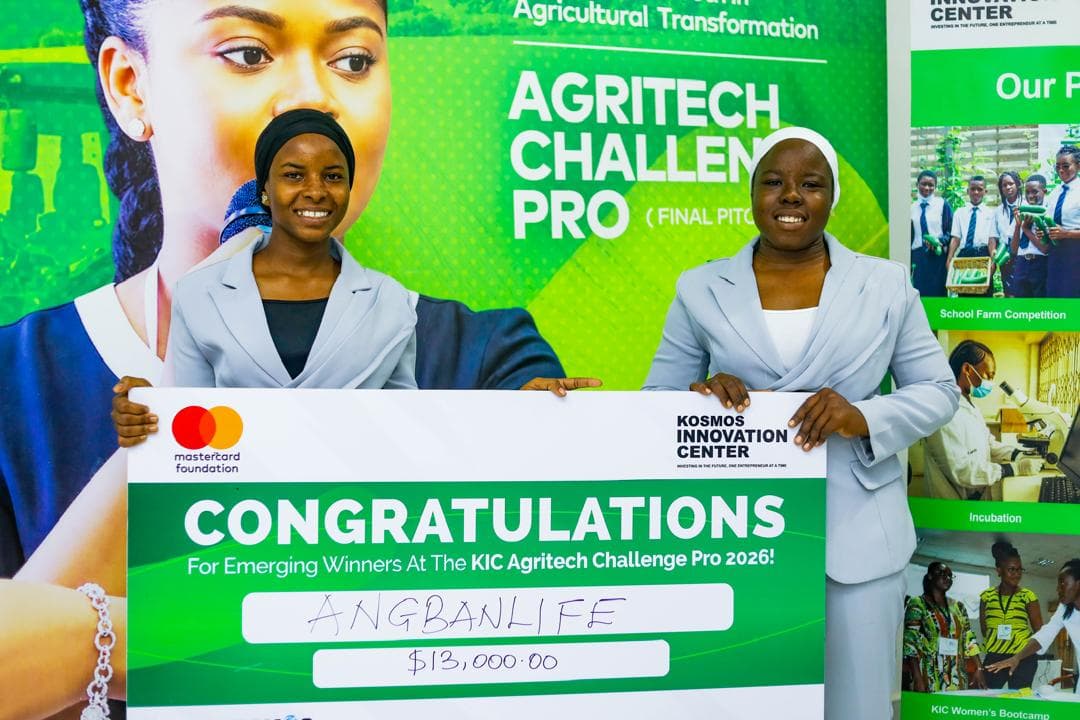
Delimush began its growth journey as a start-up participating in the Kosmos Innovation Center (KIC)’s AgriTech Challenge Pro under the Initiative for Youth in Agricultural Transformation (IYAT) programme, in partnership with the Mastercard Foundation. The company emerged as one of the winners in 2024.
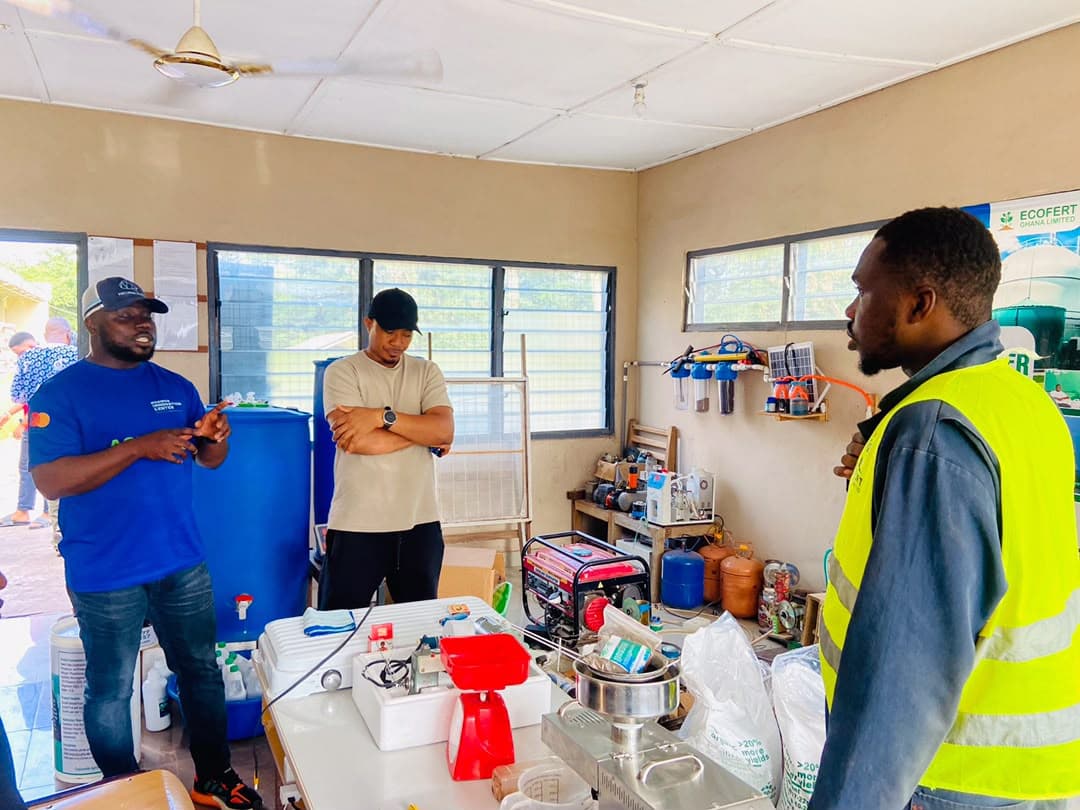
At the time, production was modest. Delimush could produce approximately 40 cans of mushroom in sauce and 150 packs of mushroom biscuits per week. Like many early-stage businesses, the company faced challenges beyond production—including business development, market positioning, operational systems, fundraising and access to growth opportunities.
KIC's support helped the team begin addressing these gaps.
Through KIC's business incubation programme, Delimush received a US$10,000 grant, alongside entrepreneurship and business management training, mentorship, business advisory support and opportunities to connect with strategic partners and markets.
The value of this support went beyond the financial investment. It helped the founders strengthen the systems behind the business, refine their model, build fundraising capabilities and develop the confidence and capabilities required to pursue growth.
Two years later, the change is visible in the numbers.
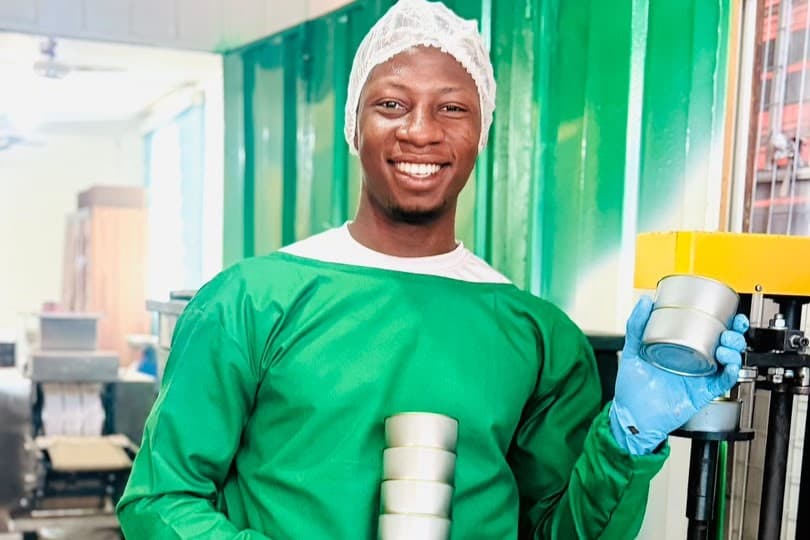
Delimush now produces approximately 300 cans of mushroom products and 900 packs of mushroom biscuits each week—representing significant growth from where the business started. This increase has helped to expand their operations and revenue, helping them to support more women, households and communities with affordable nutritious food meal options.
But the real story is not only about production. It is about what that growth makes possible.
For the young entrepreneurs behind Delimush, the business has become more than a commercial venture. It has provided a pathway to turn an idea into an enterprise and to build livelihoods around innovation in agriculture. The journey demonstrates an important dimension of youth-led agricultural transformation: young people are not simply entering agriculture as producers. They are increasingly becoming innovators, processors, manufacturers, employers and problem-solvers across the agricultural value chain.
For Abdul and his team, mushroom farming has become a platform for pursuing a larger ambition—using locally available food resources to address nutrition challenges while creating economic opportunities.
Their experience also challenges the perception that agricultural entrepreneurship must follow traditional models. Mushrooms require relatively limited land compared with many conventional agricultural activities, while offering opportunities for processing and value addition. By developing fresh, dried and processed mushroom products, Delimush is showing how young entrepreneurs can create value beyond primary production.
Creating livelihoods and supporting households through enterprise
The growth of Delimush has also translated into livelihoods not only for the founders, but for those they employ. Today, the company provides 21 employment opportunities for young people, creating income-generating opportunities within the local economy.
The business is also working with women's networks to support mushroom production for Delimush, creating another pathway through which value from the enterprise can reach households. This is an important part of Delimush's model. Agricultural transformation is not only about increasing the output of a single enterprise; it is about creating connections through which different people can participate in value creation.
For employees and participating producers, those connections can mean opportunities to earn, develop skills and gain experience within an emerging agricultural value chain.
Making innovation visible and count for communities
Delimush's growth is also helping to demonstrate agricultural entrepreneurship for many young people in Northern Ghana. The company's story is rooted in an important form of indigenous innovation: recognising the potential of a food resource and adapting knowledge, cultivation techniques, processing and entrepreneurship to create products for contemporary consumers.
Rather than separating traditional knowledge from modern enterprise, Delimush's journey shows how local knowledge and contemporary technology can work together, giving others the example to pursue entrepreneurial opportunities.
The company is also an integral part of the community, supplying fresh and dried mushrooms, mushroom biscuits and canned mushroom products to households, retailers, restaurants and institutional buyers.
Each product represents another step in moving value creation closer to the producer and connecting agricultural innovation to consumers.
And as the business grows, so does the visibility of an alternative agricultural pathway—one where young people can build enterprises around food processing, nutrition, technology and manufacturing rather than seeing agriculture only through the lens of primary production.
Advocating for participating of young people in food systems transformation
Perhaps the broader significance of Delimush lies in the question it asks about Ghana's food system:
What if agricultural transformation means not simply producing more food, but finding new and locally relevant ways to produce nutritious food, create jobs and use resources more efficiently?
For Delimush, mushrooms offer one possible answer.
The founders see mushroom and mycoprotein-based products as part of the search for alternative sources of nutritious protein at a time when pressure on land, water and other resources is increasing.
This positions mushroom cultivation not simply as a niche agricultural activity, but as an opportunity to explore new approaches to food production, processing and nutrition.
Delimush's journey therefore connects several priorities within Ghana's agricultural transformation agenda: youth employment, local innovation, food and nutrition, value addition, women's economic participation and sustainable enterprise development.
It also demonstrates the multiplier effect that targeted support for young entrepreneurs can create.
An investment in one enterprise can translate into new jobs, new products, new markets, new producer relationships and new possibilities for others.
Delimush's story is ultimately a story about possibility. It is about a young entrepreneur looking at something familiar and seeing something more. It is about indigenous innovation meeting entrepreneurship. It is about moving from production to value addition.
And it is about young people demonstrating that agriculture can be a space for technology, manufacturing, creativity and enterprise.
From producing 40 cans and 150 packs a week to approximately 300 cans and 900 packs, from an early-stage start-up to a growing employer, Delimush's progress illustrates what can happen when entrepreneurial ambition is matched with the right capital, capabilities, networks and opportunities.
The journey is still unfolding. Delimush's next ambitions include increasing production capacity, expanding its range of mushroom-based products, establishing an automated production facility and reaching new markets. For the company, the destination is bigger than mushrooms.
It is a vision of an agricultural sector where young people can build viable enterprises from local resources; where women and communities can participate in value chains; where indigenous innovation can become commercially valuable; and where food production can contribute simultaneously to nutrition, jobs and economic opportunity.
For the Kosmos Innovation Center, Delimush represents the kind of transformation that youth-focused agricultural entrepreneurship can help unlock: an individual or team idea becoming an enterprise, an enterprise creating livelihoods, and a local innovation contributing to a broader conversation about the future of Ghana's food system.
This is what agricultural transformation can look like when young people are given the opportunity to build—not only farms, but businesses, solutions and new possibilities.
From opportunity to enterprise. From indigenous innovation to impact.